

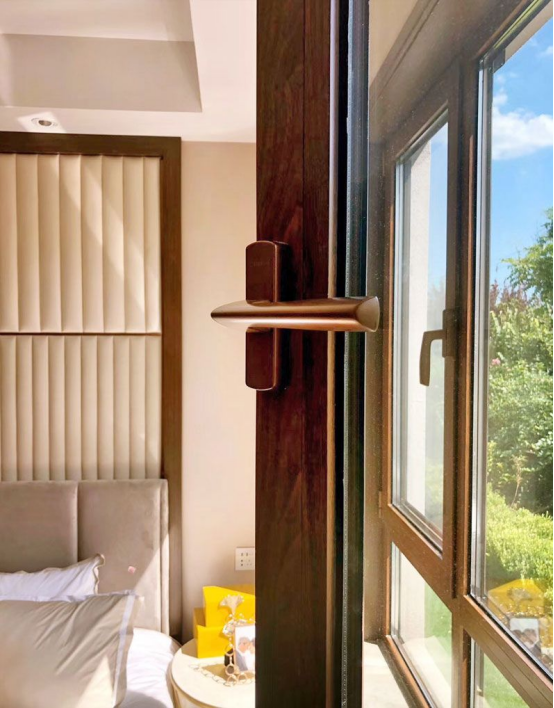
Aluminum frames are valued for slim profiles, strength, and clean modern lines, but their hardware still has to manage sash weight, weather pressure, and repeated operation. Aluminum inswing casement windows need components that fit the profile accurately and support inward movement without frame distortion. CMECH in-swing casement information describes anti-misoperation, multi-point locking, sash support, and handle options. For any inswing casement window, lightweight framing should be paired with hardware that maintains compression and alignment.
Lightweight Frames Still Need Strong Support
Aluminum can make a window appear light, but the sash may still carry large glass and face wind load. Hinges must support the sash without loosening, while the frame must accept fasteners securely. An inswing casement window should be assessed by sash dimensions, glass weight, opening frequency, and the expected service environment. Hardware selected only by profile appearance may not provide enough long-term stability. Thermal breaks, surface finishes, and drainage details should also be considered when hardware is fixed to aluminum profiles.
Locking Improves More Than Security
CMECH describes multi-point locking for inswing casement systems as improving water tightness, air tightness, and wind-pressure resistance. This is especially important for aluminum inswing casement windows because slim frames need controlled gasket compression. The lock should pull the sash evenly into the frame. If pressure is uneven, the window may close loudly, leak air, or require repeated adjustment after installation. This prevents a slim design from becoming difficult to use after weather exposure. Profile samples should be tested with the chosen hinge and lock set before production.
Configurations Should Match the Building Use
A residential project may prefer concealed hinges for appearance, while a commercial or service area may favor exposed hardware for easier adjustment. Integrated fly-screen configurations can improve daily comfort in climates where ventilation is frequent. The correct inswing casement window package should also consider handle style, hinge opening angle, maintenance access, and compatibility with aluminum profiles used by the fabricator.
Aluminum window performance depends on the interaction between profile and hardware. Aluminum inswing casement windows should be specified with attention to hinge load, locking pressure, weather resistance, screen integration, and long-term adjustment. CMECH product information provides a structured basis for evaluating an inswing casement window where slim appearance must still meet functional requirements. When the hardware matches the profile, the frame can remain clean-looking and dependable.

