

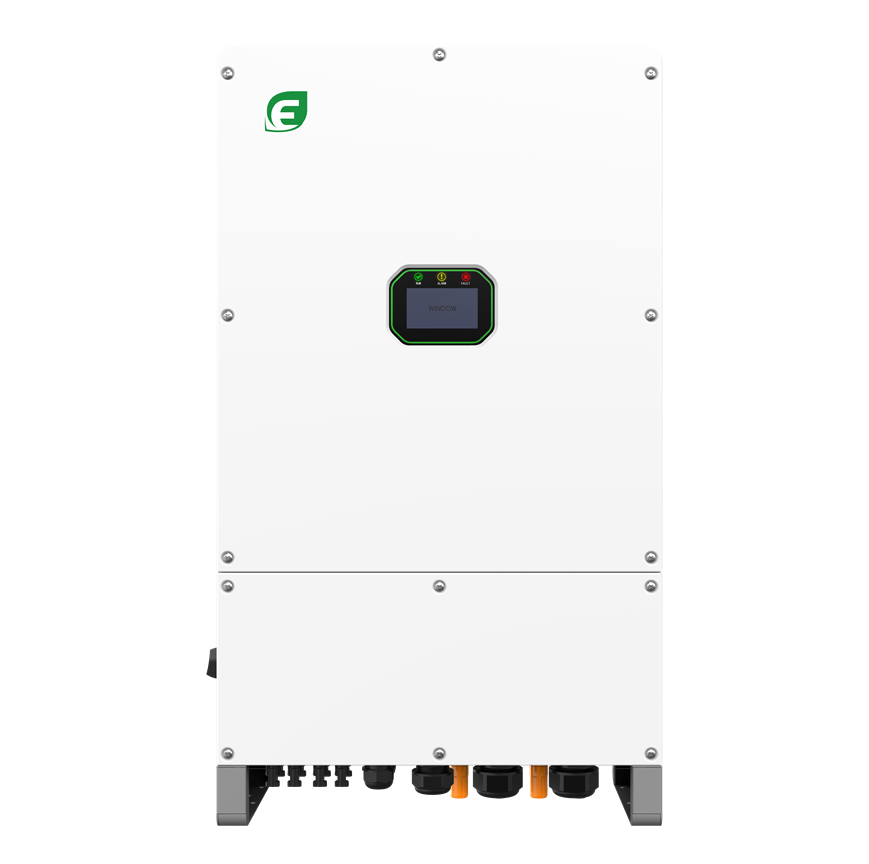
Solar PV installations traditionally rely on unidirectional power conversion, transforming direct current from solar arrays into alternating current for grid consumption. In contrast, integrating a bidirectional PCS in battery energy storage system deployments allows energy to flow in two directions, enabling both battery charging from the grid or solar panels and discharging back during peak demand. Engineering teams evaluating site electrical designs must carefully consider these fundamental operational differences when selecting power conditioning equipment.
Operating out of advanced manufacturing facilities, Enjoypowers specializes in designing resilient power conversion hardware for commercial solar and storage applications. Driven by strong internal R&D, tailored customization capabilities, verified product stability, and responsive global technical service, the company assists engineering teams with complex site integrations. Project managers and facility developers are encouraged to submit project specifications to request detailed technical evaluations.
Bidirectional Power Flow Mechanisms versus Single-Direction Conversion
Conventional grid-tied PV inverters are primarily designed to convert DC power from solar arrays into AC power for grid-connected operation. Dynamic bidirectional conversion in a battery energy storage system inverter PCS allows active power transfer between DC battery racks and the AC grid in response to fluctuating electricity prices or site load spikes.
Bidirectional switching control requires sophisticated power semiconductor topologies that handle rapid current reversals without destabilizing system voltage. This dual-direction capability enables commercial facilities to execute peak shaving and load shifting strategies efficiently.
Advanced Outdoor Hybrid Conversion Topologies
Commercial installations requiring both solar generation and battery management benefit from integrated hybrid topologies. Enjoypowers offers IP66 hybrid inverter configurations ranging from 40 kW to 125 kW, covering commercial PV-plus-storage applications.
Capable of supporting up to 120 kWp of solar input with maximum conversion efficiency reaching 98%, this hybrid platform operates reliably across commercial rooftops and harsh off-grid environments. Integrated design reduces balance-of-plant wiring complexity while maximizing energy yield across variable weather conditions.
Fast Response Time and Dynamic Grid Support Functions
Conventional grid-following PV inverters generally use the utility grid as the voltage and frequency reference and operate according to applicable grid protection and interconnection requirements during abnormal grid conditions. Energy storage PCS can actively support voltage and frequency regulation within compatible microgrid and grid-connected applications.
Fast transient response prevents dynamic voltage sags from disrupting site operations during sudden utility switching events. Active grid support features help commercial facilities satisfy strict utility interconnection codes.
Four-Quadrant Power Control and Reactive Power Management
Depending on the system architecture and product configuration, advanced energy storage converters can provide independent active and reactive power control across four operating quadrants. Precise control over phase angles allows facility managers to correct low site power factors dynamically.
Supplying localized reactive compensation reduces current stress on upstream distribution transformers. Active and reactive power control can help support power factor management when configured for the specific site requirements.
Off-Grid Islanding and Grid-Forming Capabilities
Grid-tied PV inverters require an active utility reference voltage to operate, rendering them non-functional during grid outages. An IP66 Hybrid Inverter supports seamless transition to off-grid mode, establishing local voltage and frequency references to sustain critical commercial loads during blackouts.
Grid-forming control algorithms regulate output voltage continuously under fluctuating load conditions. For compatible off-grid applications, grid-forming control can support critical loads when the utility supply is unavailable, subject to system capacity and operating conditions.
Thermal Management and Environmental Enclosure Ratings
Commercial energy storage systems often face demanding outdoor deployment environments subject to rain, dust, and temperature extremes. Housing conversion electronics inside rugged enclosures protects sensitive power semiconductors from environmental degradation.
An IP66-rated enclosure provides protection against dust ingress and water jets under specified test conditions, supporting outdoor deployment. Advanced thermal dissipation channels maintain stable internal temperatures during continuous full-power charge and discharge cycles.
BMS Interfacing and Dynamic Charge-Discharge Logic
Standard solar converters communicate primarily with monitoring portals to report daily energy generation metrics. A battery energy storage system inverter PCS exchanges high-speed telemetry with the local Battery Management System to monitor cell voltages, state-of-charge, and temperature boundaries continuously.
Real-time communication between the PCS and battery management system helps coordinate charging and discharging within configured battery operating limits. Closed-loop control preserves battery health and extends overall storage system longevity.
Evaluating Power Conditioning Equipment Selection Criteria
Selecting appropriate power conversion hardware requires analyzing peak site loads, solar array sizing, and utility tariff structures. Deploying a versatile PCS in battery energy storage system architecture allows system integrators to adapt conversion capacity to specific commercial facility demands.
Evaluating conversion efficiency, enclosure protection ratings, and communication compatibility ensures long-term operational success. Modular design options simplify future capacity expansion as facility electrical requirements increase over time.
Evaluating Long-Term ROI and Utility Bill Savings
Investing in bidirectional power conditioning hardware enables commercial facilities to unlock revenue streams through demand charge reduction and time-of-use tariff arbitrage. Choosing a flexible battery energy storage system inverter PCS allows site operators to adjust battery dispatch schedules as utility rate structures evolve.
Where demand charges are significant, peak-demand reduction can improve the economic case for a BESS project while the system can also provide backup power when configured for that application. High conversion efficiency minimizes internal energy losses during daily charge and discharge cycles.
Conclusion
Understanding the structural and operational distinctions between standard PV inverters and bidirectional energy storage converters is essential for designing resilient commercial energy infrastructure. Hardware engineered by Enjoypowers offers advanced power conditioning performance backed by internal R&D, flexible product customization options, high equipment stability, and responsive worldwide technical service. Engineering teams, facility owners, and project developers are invited to contact technical specialists to obtain detailed product documentation and request customized installation proposals.

