

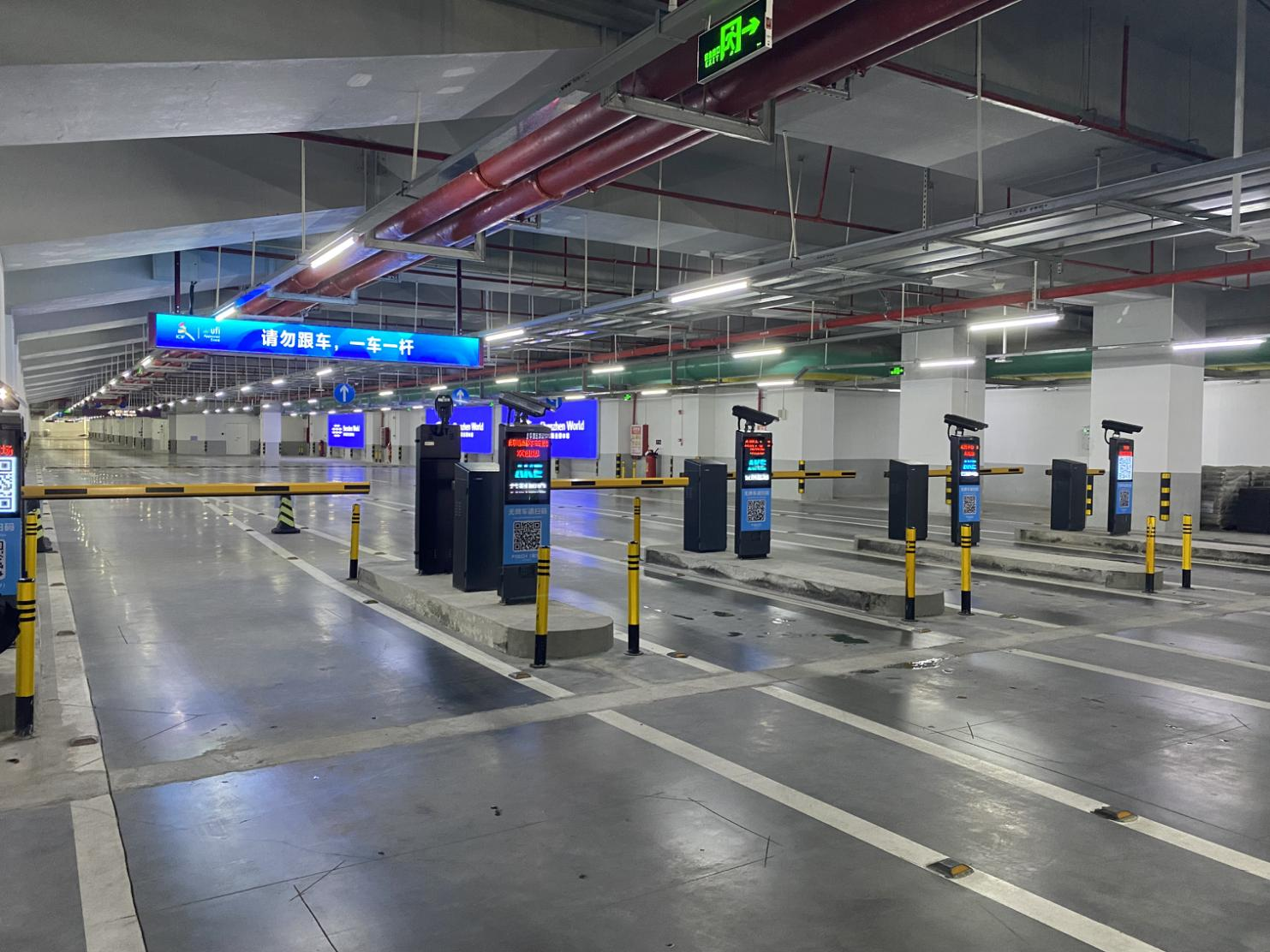
A driver using a parking ticket collects it, keeps it during the visit, and presents it for payment or departure. Replacing that object with a plate record changes several interactions, but the site still has to identify the parking stay and confirm its payment. A fair comparison follows the parking credential, the location of payment, and the point at which staff must intervene.
Who Holds the Parking Credential
The ticket represents a particular parking stay and places a physical credential in the driver’s care. A ticket number can be linked to the entry time and charging information in a digital system. Paper therefore does not automatically mean that the facility lacks electronic records; the distinction concerns how the driver retrieves and presents that record.
An automated parking lot management system using plate recognition instead associates the stay with the vehicle’s plate record. Cameras identify the approaching vehicle before barrier control applies the relevant access and charging rules. In the normal case, the driver does not have to collect a card or keep a ticket for later presentation.
Both arrangements can encounter missing information. A lost ticket leaves staff needing to establish the applicable parking stay, while an unreadable plate requires another means of locating or confirming the vehicle record. Neither exception is resolved merely by choosing a different credential. Staff need a defined basis for verification before making a charging or release decision.
For car park management system suppliers, the distinction creates specific demonstration cases: admission, a missing credential, and a vehicle requiring assistance. The comparison becomes more useful if it identifies which driver actions disappear and which staff decisions remain. Removing ticket collection changes the interaction; it does not remove responsibility for identifying the stay.
Payment Before the Lane and Confirmation at Exit
Paying for parking and receiving permission to leave are separate events. A driver may finish a transaction before reaching the exit, but the lane equipment still needs confirmation that the payment applies to the vehicle now waiting. The practical question is which tasks must be completed while that vehicle occupies the exit lane.
With an automated parking lot management system, advance QR or mobile payment can move the transaction away from the barrier. The driver completes payment earlier, and the exit checks the corresponding record. A plate-based exhibition access design can combine this arrangement with authorization and charging rules applied at vehicle identification.
Ticket facilities can also provide payment stations before the exit. The difference then lies in the final interaction: presenting a validated ticket or matching a vehicle to its paid record. Comparing those two arrangements avoids crediting plate recognition with every benefit of advance payment. The payment location and the credential used at departure deserve separate consideration.
Departure validity is another condition. A confirmed advance payment permits release within the specified departure period; it is not an unlimited permission to leave at any later time. Payment timing gives car park management system suppliers a concrete requirement to demonstrate. Staff must be able to distinguish an unpaid stay, a valid payment, and a departure outside the agreed window.
Keeping Cash and Assistance Within Reach
Cash users and vehicles without plates test the limits of a flow designed around plate matching and mobile payment. An automated parking lot management system still needs an alternative payment route and a way to obtain assistance. Otherwise, a driver who cannot complete the expected interaction can remain stranded at the final stage of the visit.
The Automatic Pay Station from AKE Parking addresses several of these needs through self-service payment. It accepts banknotes across denominations and supports driver scanning, merchant scanning, QR payments, and departure for vehicles without plates. The terminal works with plate recognition controllers, bringing payment interaction into the wider access arrangement rather than requiring every user to follow one payment method.
The Automatic Pay Station has a 15-inch LCD touchscreen with brightness up to 1,000 cd/m². Its specifications list an effective scanning distance of 1,000 mm and an effective voice-intercom distance of 1,500 mm. These figures inform where a user stands or stops and whether prompts are legible. Screen visibility, cabinet placement, and reaching the interaction point matter alongside the payment methods listed.
TCP/IP communication carries operational data, remote assistance, and online updates between the terminal and its connected platform. A working demonstration gives car park management system suppliers an opportunity to show how an unresolved transaction reaches assistance. The relevant check is whether the driver receives usable guidance and the operator can handle the payment or access problem. Unresolved cases need named operators.
Single-unit orders from AKE Parking carry purchaser-paid shipping and a one-year warranty. Customized housings and customer logos concern the physical terminal, whereas platform-interface integration concerns its connection to parking records and assistance. These customization options address different parts of a ticket-to-plate transition, separating cabinet presentation from the information exchanged during payment and departure at the exit lane.
Changing Credentials While Retaining Usable Routes
A site moving to an automated parking lot management system should retain payment and assistance routes suited to its actual users. The brief given to car park management system suppliers can specify where ticket handling or plate matching fits a mixed arrangement. After the credential changes, cash users, vehicles without plates, and drivers needing manual help still require a workable route through payment and departure.

