

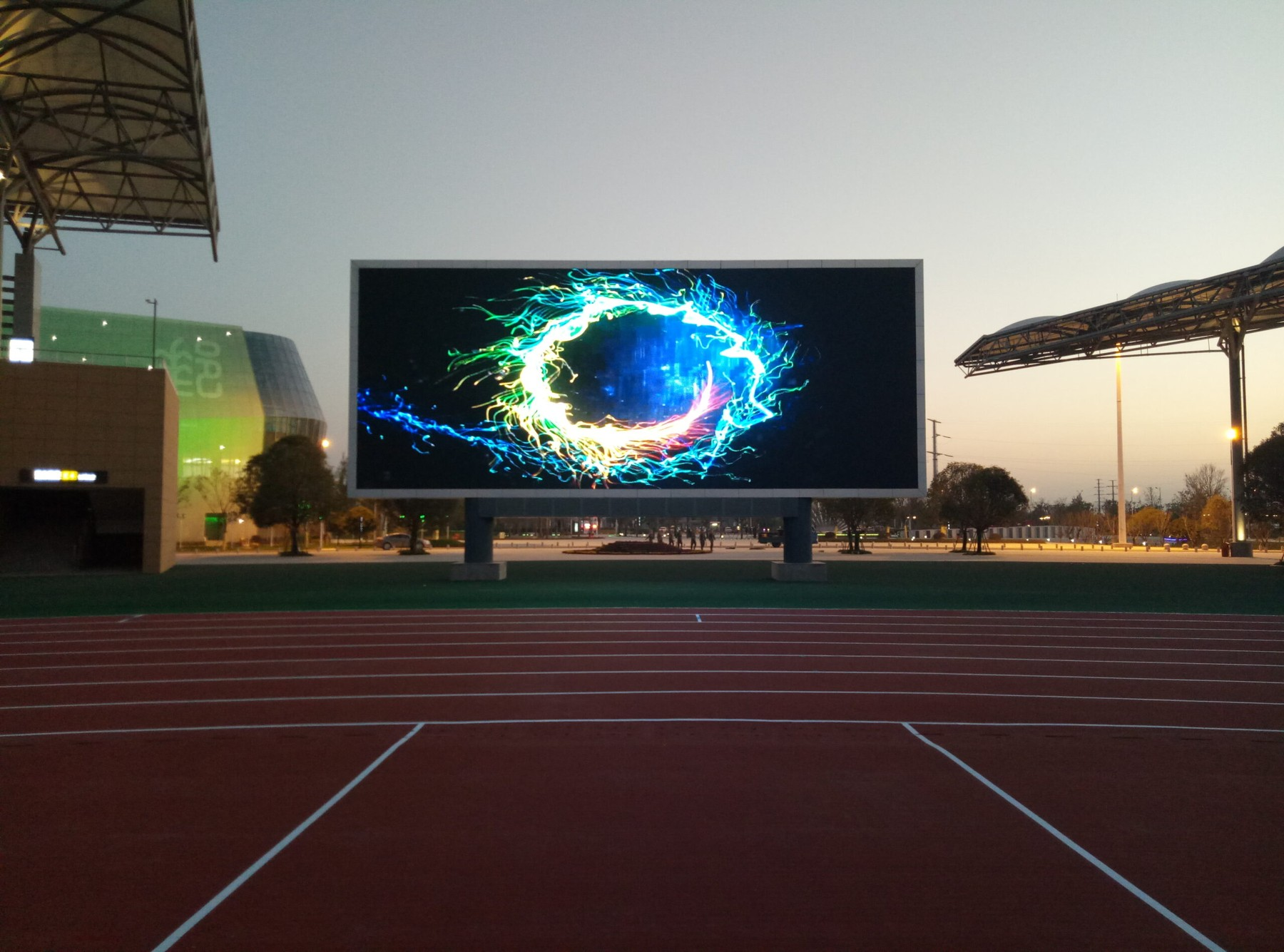
Commercial display projects are evolving as businesses seek more engaging customer experiences, flexible installation options, and reliable long-term performance. From retail storefronts and corporate lobbies to transportation hubs and exhibition venues, LED display technology is expanding the possibilities for communicating information and presenting visual content. For project developers, system integrators, and procurement teams, understanding emerging trends helps guide technology selection, budget planning, and investment decisions.
Fine-Pitch Technology Is Expanding Visual Clarity
One major trend is the growing adoption of fine-pitch displays in environments where viewers stand close to the screen. Smaller pixel pitches allow images and text to appear sharper at shorter viewing distances, making this technology suitable for meeting rooms, premium retail spaces, control centers, and corporate presentation areas. Advances in chip packaging, including Chip-on-Board (COB), are also supporting high-resolution applications.
For project planners, selecting pixel pitch requires balancing viewing distance, content type, resolution, and budget. An ultra-fine pitch may be justified for detailed dashboards or product presentations, while a larger pitch can be more economical for distant audiences. The objective is to match image quality to actual viewing conditions instead of paying for resolution that a venue cannot fully utilize.
Flexible Designs Are Transforming Commercial Spaces
Commercial displays are no longer limited to conventional rectangular video walls. Transparent panels, curved installations, creative shapes, and architectural integrations are giving designers more options for incorporating visual communication into buildings and retail environments. These formats can support storefront advertising, shopping mall attractions, exhibition stands, and distinctive building facades.
Transparent displays are particularly relevant where businesses want to present promotional content without completely blocking the view through glass. Creative configurations can also help brands establish recognizable visual identities. HDC serves this demand through creative and commercial display solutions, with customization options for projects requiring specific designs or installation arrangements.
However, flexibility must be evaluated alongside structural support, ambient lighting, maintenance access, and installation conditions. A visually striking design is only commercially effective when it can be installed safely and operated reliably within the intended environment.
Easier Installation and Maintenance Are Becoming Priorities
Project owners increasingly consider installation complexity and servicing requirements when evaluating display systems. Modular cabinets, integrated components, and all-in-one configurations can simplify deployment in suitable applications, reducing the number of separate components that installers must coordinate. Industry coverage of recent professional AV developments also highlights a shift toward easier specification, installation, and maintenance.
These improvements matter to system integrators managing tight schedules, multiple contractors, or installations in occupied commercial buildings. Accessible components and planned maintenance procedures can help reduce disruption when servicing is required. Before procurement, project teams should clarify cabinet dimensions, mounting methods, power and signal distribution, spare-part availability, and access to technical support.
An LED screen should therefore be assessed as part of a complete display system, not simply as a collection of panels. Compatibility with control equipment, content sources, and the building’s infrastructure can influence installation costs as much as the display hardware itself.
Energy Efficiency and Reliability Influence Purchasing Decisions
Energy consumption is becoming an important consideration for commercial display procurement, particularly for installations operating throughout business hours or around the clock. Power requirements vary with brightness, displayed content, screen configuration, and operating conditions. Buyers should compare manufacturer specifications and consider expected operating hours when estimating electricity costs.
Reliability is equally important because unexpected downtime can interrupt advertising campaigns, customer communications, and business presentations. Procurement teams should examine quality-control procedures, component consistency, thermal management, and warranty arrangements before selecting a supplier. Certifications and documented testing can provide useful evidence of manufacturing and quality-management practices, although they do not replace application-specific performance verification.
HDC emphasizes systematic quality management from raw materials through finished products, supported by full-chain quality control and ISO-certified manufacturing processes. Its two manufacturing bases in Jiangsu and Anhui provinces provide production resources for commercial projects.
Integrated Systems and Content Flexibility Matter More
Commercial displays increasingly serve multiple communication purposes, from promotional campaigns and wayfinding to corporate presentations and live information. This creates demand for systems that can accommodate different content formats and integrate with existing audiovisual infrastructure.
During planning, buyers should confirm controller compatibility, supported resolutions, signal interfaces, content-management requirements, and remote monitoring capabilities where needed. They should also establish who will manage content updates and troubleshoot technical issues after commissioning. These practical considerations help avoid integration problems and unnecessary costs later.
For multi-site retailers and commercial property operators, standardizing equipment and service procedures across locations can simplify staff training and maintenance. Nevertheless, standardization should not eliminate necessary differences between indoor, outdoor, fixed-installation, and temporary-event applications. Environmental conditions and project objectives should determine the final configuration.
Manufacturing Capability Supports Project Consistency
As display projects become more customized, supplier evaluation extends beyond product appearance and unit pricing. Buyers need confidence that a manufacturer can maintain consistent quality across production batches, meet agreed delivery schedules, and provide support throughout the project lifecycle.
This is particularly important for contractors handling repeat orders or large installations, where inconsistencies between cabinets can affect visual uniformity and commissioning time. Procurement teams should request relevant technical documentation, inspect samples when practical, and confirm acceptance criteria before mass production begins.
HDC integrates research and development, manufacturing, sales, and service for creative and commercial displays. Its two advanced manufacturing bases, quality-control procedures, and ISO-certified management provide a foundation for serving different project requirements. For business buyers, these capabilities are relevant when comparing suppliers on production readiness, quality consistency, and long-term cooperation rather than price alone.
Making Technology Choices That Deliver Long-Term Value
Commercial display technology is progressing toward sharper imagery, more creative designs, simplified installation, improved operational efficiency, and stronger integration with business environments. Yet no single development is suitable for every project. Successful procurement depends on aligning display performance with viewing distance, venue conditions, content requirements, maintenance expectations, and the available budget.
For system integrators, commercial property developers, and corporate procurement teams, the most effective approach combines careful technical evaluation with a realistic assessment of lifecycle costs. HDC‘s focus on manufacturing quality, production capability, and customized commercial display solutions makes it a supplier worth considering when evaluating options for new installations or upgrades. A well-specified display system can support consistent visual communication while meeting the practical demands of commercial operations.

