

Fleet tracking can be handled through dedicated GPS hardware or mobile applications, but the two methods serve different operating needs. Mobile apps are easy to deploy because they use a driver’s phone, while dedicated devices stay linked to a vehicle or asset. For companies comparing GPS trackers for fleet vehicles with app-based tracking, the key questions involve tracking continuity, hardware independence, power supply, maintenance, and integration with fleet management systems.
How Mobile App Tracking Works
Mobile tracking applications usually use the GPS function inside a smartphone. The app collects location data and sends it through the phone’s mobile network. This setup can be useful for temporary transport work, small delivery teams, or contractors who only need basic location sharing.
The main advantage is simple deployment. Companies may avoid extra hardware when drivers already carry compatible phones, which can help during short pilot projects.
However, the tracking process depends on the phone. Location reporting may stop if the battery runs low, the app is closed, permissions are changed, or the phone is left outside the vehicle. Power-saving settings can also reduce reporting frequency.
For this reason, businesses using GPS trackers for vehicle fleet management often prefer a device that stays with the vehicle or asset instead of relying on a driver’s personal phone.
Why Dedicated GPS Systems Differ
Dedicated GPS trackers are designed mainly for vehicle and asset monitoring. Once installed or mounted, they can remain assigned to one vehicle, trailer, container, or machine. This creates a clearer relationship between the physical asset and its location record.
That difference matters in logistics, mining, public transport, cold-chain, engineering, and school bus fleets. Managers may still need location records when drivers change shifts or assets remain parked.
Dedicated GPS trackers for fleet vehicles can also support a wider fleet IoT structure. Distributors, system integrators, and fleet solution providers may need hardware that connects with an existing software platform instead of working only inside one mobile application.
The hardware type should still match the asset. A powered truck may use a wired tracker, while a trailer or container may require a battery-powered device that can operate without permanent wiring.
Hardware Selection Should Match the Asset
Power availability is one of the first points to review. Trucks and buses normally provide stable onboard power, but trailers, containers, construction machines, and other mobile assets may remain disconnected from a power source for long periods.
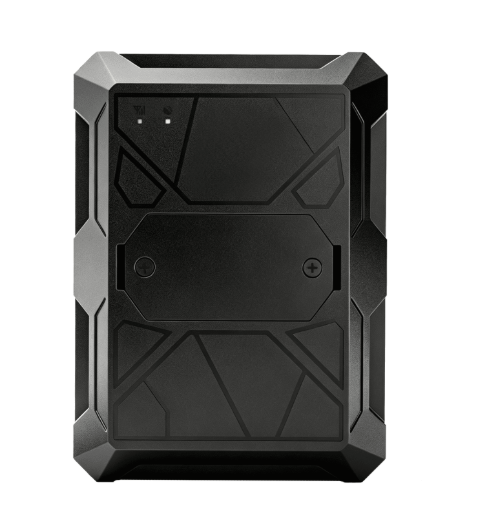
For these applications, BSJ Technology offers the EG60, a 2G and 4G long-life GPS tracker designed for mobile assets. It uses ultra-low power consumption, a 19,000mAh battery, and magnetic mounting. The device can be deployed without permanent wiring, which suits trailers, containers, construction equipment, and similar assets.
This type of product shows why GPS trackers for vehicle fleet management should be selected according to real operating conditions. Buyers should review power supply, mounting location, expected tracking duration, network coverage, and maintenance frequency before deciding which hardware format fits the project.
A phone-based app cannot always cover these conditions because there may be no driver or personal device attached to the asset.
Fleet Management Requires More Than Location Sharing
A mobile app is mainly linked to the person carrying the phone. A dedicated GPS system is linked to the vehicle or asset itself. This distinction becomes important when companies need dispatch records, route review, asset control, or centralized monitoring.
Larger fleets may also need many devices to report into one management platform. In such cases, software compatibility can be as important as location accuracy. System integrators often need hardware that can connect with the customer’s current platform instead of requiring a complete software replacement.
BSJ Technology focuses on AI video telematics, fleet IoT, GPS tracking, and fleet management hardware. They support OEM and ODM cooperation and third-party software integration, including platforms such as Wialon and GpsGate. Their R&D team includes more than 400 personnel, which supports hardware development and customization for different fleet projects.
Before deployment, buyers should check whether the device, communication method, and software environment can work together.
Which Tracking Method Fits the Fleet
Mobile app tracking is suitable when deployment needs to be fast, tracking is temporary, and the company can depend on drivers keeping their phones powered and connected. It can also work for small teams that only need basic location visibility.
Dedicated GPS trackers for fleet vehicles are more suitable when the tracked object must remain identifiable independently from the driver. This is especially relevant for trailers, containers, machinery, or vehicles that operate across changing shifts.
For structured operations, GPS trackers for vehicle fleet management can provide a more stable hardware base for centralized monitoring and asset assignment. Buyers should compare installation, power source, reporting needs, platform compatibility, maintenance workload, and the type of asset being tracked.
The Main Difference Is What Gets Tracked
The choice between a fleet GPS system and a mobile app is not simply a choice between two ways to display a map. A mobile app follows a phone and, in practice, the person carrying it. A dedicated tracker follows the vehicle or asset to which it is assigned.
That difference should guide the purchasing decision. Temporary teams may be well served by app-based tracking, while long-term fleet operations often need hardware that stays with the asset. Matching the tracking method to real fleet conditions makes the system easier to manage and more useful in daily operations.

