

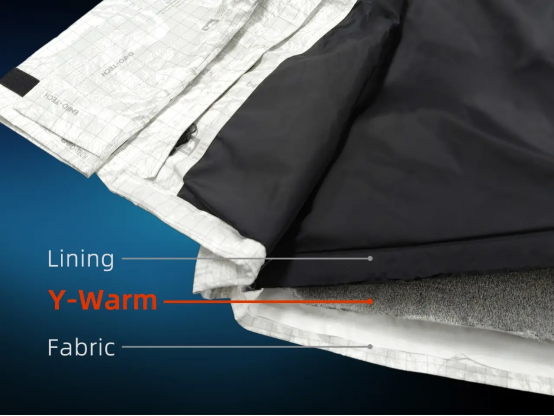
Global apparel brands face a highly complex logistical and design challenge: engineering outerwear that provides optimal thermal comfort across vastly different international climatic zones. Modern consumers, whether they are navigating urban commutes or engaging in high-intensity alpine sports, no longer tolerate heavy, restrictive garments. The current market expectation demands sleek, precision-engineered apparel that responds dynamically to sudden temperature drops without adding cumbersome volume. Achieving this delicate balance requires product directors and technical designers to move beyond simple fill-power metrics and focus heavily on the strategic application of an advanced insulating lining. By precisely matching the weight, thickness, and structural placement of these inner layers to specific environmental conditions, designers can create highly specialized, lightweight garments. At the absolute forefront of this physical textile revolution is Y-Warm, a material that grants supply chain managers and brands unprecedented control over microclimate regulation.
Defining the Core Metric of an Insulating Lining
Historically, varying the warmth of a seasonal coat meant drastically changing the physical volume of its interior filling. A deep winter parka required inches of expanded loft, while a transitional autumn jacket utilized a fraction of that bulk. This volumetric approach inherently limits aesthetic silhouettes and complicates manufacturing processes. However, by transitioning to a nanoporous matrix, product developers can manipulate thermal resistance through advanced density and structural layering rather than sheer thickness. Y-Warm represents a structural paradigm shift in this exact regard. At just 0.7mm, Y-Warm effectively blocks thermal conduction, liberating warmth from bulk. A synchronized duality of moisture absorption and quick-drying technology redefines what it means to breathe. This allows developers to decouple warmth from garment volume, utilizing a unified insulating lining that can be modularly adapted to any climate simply by adjusting how it is layered within the garment’s architecture.
Adapting Structures for Transitional and Mild Climates
For spring and autumn collections, or urban environments experiencing mild winter conditions generally above eight degrees Celsius, the primary thermal challenge is not extreme freezing. Instead, the focus shifts to mitigating wind chill and managing fluctuating body temperatures during active movement. Outerwear designed for these transitional conditions requires an insulating lining that blocks convective cooling without causing the wearer to overheat during brisk walking or commuting. In these specific scenarios, designers utilize a highly simplified, single-layer structure. By placing one textile sheet of Y-Warm directly between the outer shell fabric and the interior aesthetic lining, the garment gains exceptional windproof capabilities while remaining incredibly thin. Because the material actively absorbs and transports moisture vapor outward through its integrated hydrophilic channels, this lightweight structure ensures the wearer remains entirely dry and thermally neutral. It is the perfect architectural choice for sleek trench coats, active windbreakers, and elegant city wear.
Integrating an Insulating Lining for Active Mid-Winter Conditions
As target temperatures drop below freezing, hovering between negative five and positive five degrees Celsius, the structural requirements of the outerwear naturally intensify. For active winter sports, standard skiwear, and moderate winter outdoor workwear, retaining core body heat becomes just as critical as blocking the external cold environment. Traditional manufacturing solutions would rely on medium-weight synthetic batting to bridge this gap, which inevitably adds noticeable bulk and restricts the wearer’s range of motion. Instead, advanced outerwear architecture utilizes Y-Warm as a primary, stand-alone thermal shield. Because the material boasts an extremely low thermal conductivity, a single layer preserves the microclimate generated by the human body without requiring vast pockets of trapped air. Brands can maintain a highly tailored, aerodynamic fit while delivering the thermal equivalent of a much heavier, quilted coat. This targeted application provides a distinct, highly marketable competitive edge in the premium activewear and winter fashion sectors.
Composite Layering for Extreme Cold Environments
Designing for extreme alpine expeditions, deep winter climates below negative ten degrees Celsius, and specialized professional workwear demands a composite structural approach. In these unforgiving environments, a single mechanism of heat retention is rarely sufficient to ensure safety and comfort. To construct the ultimate heavy-duty outerwear without the paralyzing weight of traditional expedition suits, developers implement a hybrid insulation matrix. This involves pairing a dedicated insulating lining with a secondary lofted material. A layer of Y-Warm is positioned strategically immediately behind the outer shell fabric to act as a definitive, impenetrable barricade against sub-zero wind penetration. Beneath this high-tech shield, a traditional layer of down or fluffy synthetic fill is added to capture and hold the body’s radiant heat. This combined structure leverages the absolute best strengths of both physical properties. The nanoporous barrier prevents the freezing outside air from stripping away the trapped heat, allowing the lofted material to perform at its maximum possible efficiency. Consequently, the total volume of fluffy fill required is drastically reduced.
Streamlining Global Supply Chains and Manufacturing
Beyond the immediate consumer benefits of elegant, lightweight warmth, adopting a highly adaptable insulating lining like Y-Warm fundamentally streamlines the manufacturing process for B2B partners and factory floors. Managing multiple variations of loose fill, calculating complex baffle dimensions, and mapping out quilting patterns for different regional climates introduces immense complexity to global supply chains. By standardizing the core thermal barrier across multiple product lines, brands can vastly simplify their procurement and production logistics. Whether a factory is assembling a sleek autumn raincoat or a robust winter work jacket, the integration of this flexible, textile-like sheet remains remarkably consistent. It does not require specialized injection equipment or complex quilting channels. Factory managers simply need to ensure that lamination temperatures remain strictly below one hundred degrees Celsius to preserve the vital nanoporous integrity of the fabric.
The Future of Precision Thermal Engineering
The future of technical outerwear relies on precision engineering rather than the sheer mass of materials. By intelligently matching the structure, weight, and application method of an advanced insulating lining to the specific climatic demands of the end-user, apparel brands can significantly elevate their product offerings. Y-Warm provides the exact architectural flexibility and technological performance required to achieve this goal. It empowers product designers to create beautiful, high-performance garments that reliably protect the wearer in any environment, proving conclusively to the market that true functional luxury lies in elegant, lightweight design.

