

Reliability in a press brake comes from how consistently its main systems work together under repeated forming loads. The frame carries the force, the ram follows commanded movement, the positioning system locates the part, and the controls help operators reproduce an established setup.
A machine that performs well during one demonstration still needs stable behavior across normal production.
That makes reliability a useful way to assess sheet metal fabrication equipment beyond headline capacity. The important evidence sits in machine structure, manufacturing control, repeatable operation, and maintainability.
Where Does Press Brake Reliability Begin?
The starting point is mechanical stability. A press brake repeatedly applies high forming loads, so the frame, hydraulic system, guiding components, tooling interface, and synchronization method all influence the bending process.
RBQLTY’s published hydraulic press brake information describes welded steel structures, hydraulic transmission, synchronized cylinder movement, automatic adjustment of the slider and back gauge on selected models, and compensation beneath the worktable.
These elements serve different functions. Together, they create the load path and motion system that the machine relies on during each cycle.
A reliable hydraulic press brake manufacturer explains these functions clearly. Buyers should be able to understand how the frame carries load, how ram movement is controlled, how the back gauge is driven, and how deflection is addressed. Specific design information is more useful than broad claims such as “stable performance” or “heavy-duty construction.”
How Does Manufacturing Control Affect Long-Term Reliability?
A sound design still depends on how accurately the machine is produced and assembled. Welded structures, machined mounting surfaces, guides, hydraulic components, electrical systems, and back-gauge assemblies all require controlled installation and alignment.
Assembly quality affects everyday operation. Poor alignment creates unnecessary wear, inconsistent movement, or difficult adjustment. Hydraulic cleanliness, secure wiring, parameter setup, and final inspection also influence how the finished machine behaves after shipment.
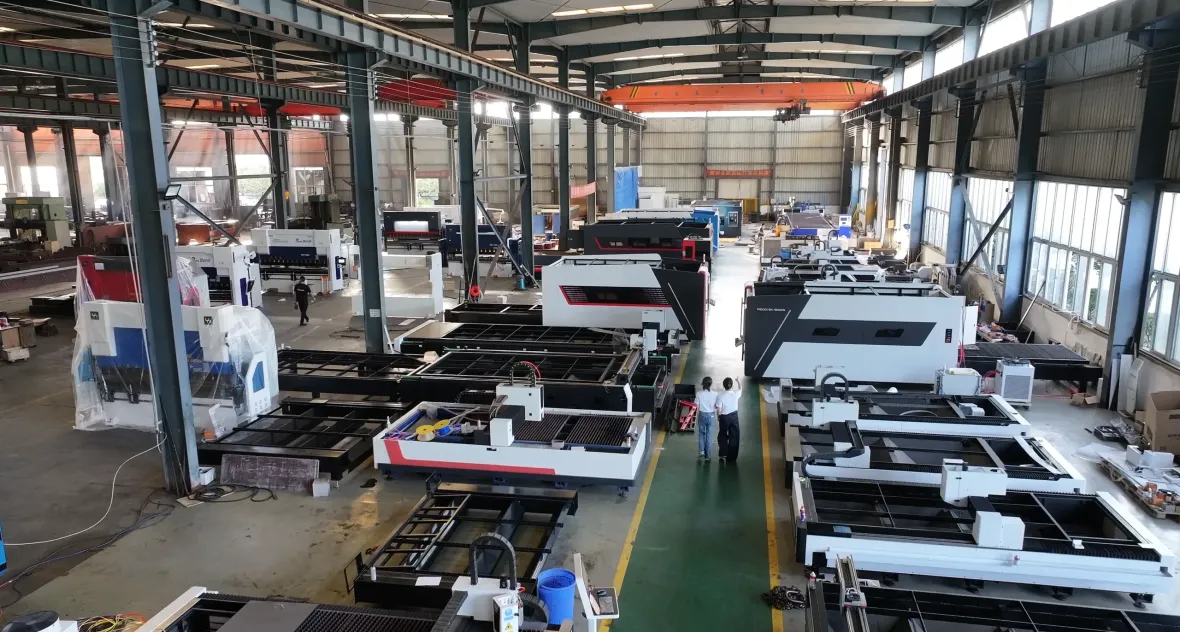
RBQLTY presents dedicated production resources for press brakes and other metal-processing machinery and publishes several configurations within the same press brake family. The useful point is not the number of workshop images. Buyers gain more from knowing how a specific machine is assembled, checked, and recorded before delivery.
Inspection records, a clear component list, and an exact configuration reference improve traceability. They also make later maintenance easier because technicians can identify what was actually installed instead of relying on a generic product description.
Serial numbers, controller versions, and option records are especially useful when replacement components or technical support are required several years after installation. Consistent inspection procedures also create a reference point before shipment.
Recorded machine settings and configuration details make later troubleshooting more structured because technicians have a known baseline for comparison.
Why Does Repeatable Setup Matter as Much as Machine Strength?
Mechanical strength alone does not guarantee consistent parts. Operators also require a repeatable way to recreate successful settings when a job returns to production.
RBQLTY lists press brakes with control options ranging from NC systems to Delem CNC platforms. Published DA-53T functions include tool, material, and product libraries, crowning control, servo and inverter control, and multiple controlled axes. DA-69T configurations add graphical programming and 3D visualisation.
Stored programs reduce dependence on undocumented manual adjustments. They give the next shift or later production batch a defined starting point. Tooling choice, material behavior, and process checks still require operator knowledge, but the setup becomes easier to reproduce.
This is an important distinction when evaluating sheet metal fabrication equipment. Reliability is not only resistance to mechanical load. It also includes the ability to repeat a known process with controlled positioning and documented settings.
What Makes a Press Brake Maintainable Over Time?
Long-term reliability depends on what happens after the machine enters service. Maintenance teams benefit from electrical diagrams, hydraulic information, controller references, lubrication guidance, wear-part identification, and records of optional or customized components.
A hydraulic press brake manufacturer also keeps the final machine configuration clear enough for future troubleshooting. When service work starts years after delivery, technicians should not have to guess which controller, drive, valve, or accessory was supplied.
RBQLTY also supplies laser cutters, shearing machines, rolling equipment, punching presses, plasma cutters, and other sheet metal fabrication equipment. For factories operating several processes, clear equipment records across the workshop simplify communication with technical teams and parts suppliers.
For a hydraulic press brake manufacturer, maintenance access matters as well. Routine inspection points, consumable items, and adjustment areas should be understood before the machine becomes part of a busy production schedule. Clear service intervals also help teams plan maintenance without waiting for a fault to interrupt normal bending work.
Conclusion
Reliability is easier to examine when it is broken into visible evidence: structural stability, controlled assembly, repeatable setup, and maintainable records. RBQLTY publishes several hydraulic press brake configurations with model-specific control and structural information.
Those details provide a useful starting point, while the final assessment still depends on how consistently the supplied machine can be operated, serviced, and traced over its working life.

