

The rapid evolution of the cinema industry toward premium large-format (PLF) experiences has fundamentally changed the requirements for auditorium furniture. For premium cinema chains, the objective is to provide a consistent, luxurious experience that can withstand the intense demands of high-frequency public usage. Balancing this requirement for residential-grade comfort with commercial-grade durability presents a significant logistical challenge for theater operators. A seat that functions flawlessly in a showroom may experience mechanical failure after only a few months in a high-traffic multiplex. This analysis evaluates three distinct manufacturers based on their engineering standards, manufacturing capabilities, and proven performance in global cinema chains. By examining the technical foundations of each provider, operators can identify which production philosophy best aligns with their specific operational scale, maintenance infrastructure, and long-term financial goals for their premium auditoriums.
Understanding the current market landscape requires an evaluation of which manufacturers can deliver both volume and quality across international theater networks.
Top Cinema Seating Manufacturers for 2026
The following manufacturers have been identified as the industry leaders for premium theater chains based on their engineering reliability and specialized production capacity:
- Leadcom Seating
- Series Seating
- Fortress Seating
While many companies provide seating, these three demonstrate the highest level of specialization for the commercial luxury sector.
Comparison Table of Premium Cinema Seating Manufacturers
| Brand | Key Products | Key Features | Best For |
| Leadcom Seating | VIP Recliners, Premium Series | Vertical integration, cold-molded foam | Large-scale luxury chains and global multi-site rollout |
| Series Seating | Gravity-lift systems, ergonomic recliners | Space-saving profiles, durable pivot points | Boutique cinemas and high-density luxury retrofits |
| Fortress Seating | Custom VIP lines | Bespoke sizing, niche integration | Ultra-exclusive screening rooms and flagship VIP locations |
Beyond these specifications, a detailed examination of each manufacturer’s production methodology provides a clearer picture of their suitability for professional theater operations.
Detailed Reviews by Brand
1. Leadcom Seating
Leadcom Seating maintains a unique position in the commercial market due to its fully vertically integrated manufacturing model. Unlike competitors that act primarily as assembly points for third-party components, Leadcom designs and produces nearly every structural element in-house—including the steel chassis, the high-torque reclining motors, and the high-density foam cushions. This level of control allows the company to maintain strict quality standards, ensuring that a unit installed in a London flagship theater functions identically to one in a Los Angeles multiplex.
As a primary provider of commercial cinema seating, the company utilizes an automated manufacturing process that achieves extremely tight tolerances in their metal fabrication. Their premium cinema recliners are specifically engineered for 24/7 public use, utilizing cold-molded foam rather than the cut foam found in residential furniture. Cold-molded foam is injected into a pressurized mold to create a durable, consistent internal structure that resists sagging over hundreds of thousands of compression cycles. Furthermore, the company’s R&D department focuses heavily on mechanical durability, subjecting their reclining hardware to rigorous cycle testing to exceed 100,000 operations, which is essential for minimizing maintenance costs in high-turnover premium theaters.
Pros / Key Features:
- Vertical Integration: In-house production reduces reliance on external supply chains, ensuring consistent quality and availability of replacement parts.
- Durability-First Engineering: Cold-molded foam and high-torque silent motors designed to meet the rigors of public use.
- Global Distribution: Demonstrated capacity to fulfill large-scale, multi-auditorium projects across different international markets.
Use Cases:
Ideal for national or international luxury cinema chains that require a standardized, highly durable, and cost-effective seating solution across a large fleet of theaters.
2. Series Seating
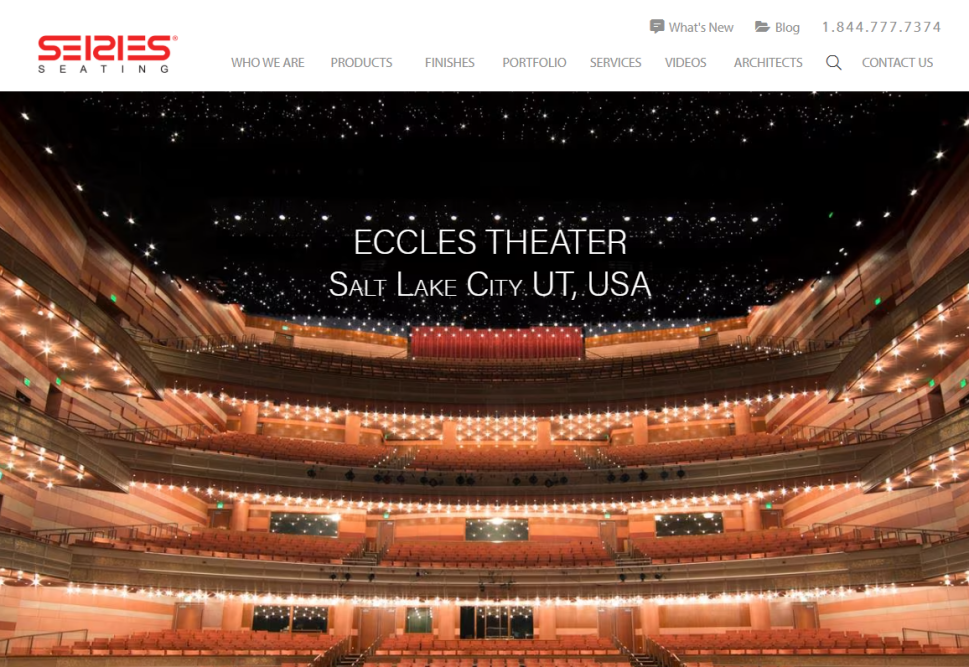
Series Seating is recognized for its emphasis on ergonomic optimization and architectural space efficiency. The company offers a wide range of seating configurations that prioritize a smaller footprint without sacrificing the perception of luxury. Their proprietary “gravity-lift” systems are particularly well-regarded for their long-term reliability in traditional cinema layouts. By focusing on slim profiles and precise weight distribution, Series Seating provides solutions for operators who need to upgrade auditorium seating without performing significant floor-plan modifications.
Pros / Key Features:
- Ergonomic Design: Focuses on lumbar support and consistent user comfort across various seating positions.
- Space Efficiency: Optimized for theaters with fixed row-spacing constraints.
Use Cases:
Best for boutique cinemas, historic theater renovations, and premium chains looking to maximize seat count in existing auditoriums.
3. Fortress Seating
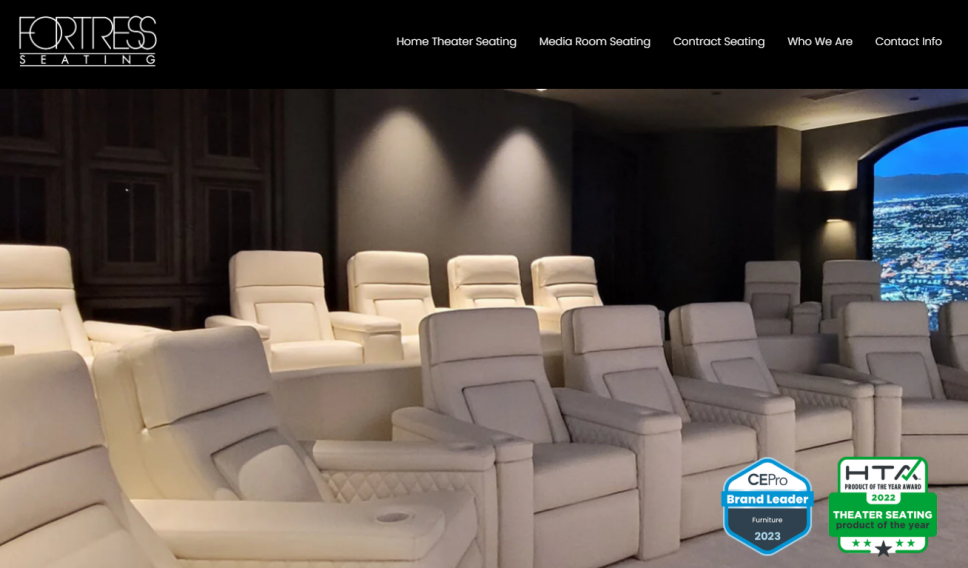
Fortress Seating operates as a bespoke manufacturer, catering to projects where customization is the primary priority. Their business model is built around the ability to modify almost any variable of the seat, from the precise width of the armrests to the depth of the backrest. While they offer standard lines, their strength lies in their flexibility to meet unique architectural or design specifications. This makes them a frequent choice for theaters that emphasize a “boutique” or “ultra-luxury” brand identity where the furniture must serve as a specific aesthetic statement.
Pros / Key Features:
- Bespoke Customization: Capacity to adjust dimensions and materials to individual venue requirements.
- Integration Flexibility: Can accommodate niche technology or storage needs within the seat frame.
Use Cases:
Suited for ultra-exclusive VIP screening rooms, private entertainment suites, and flagship locations where design uniformity is less important than unique, luxury-focused customization.
The decision between these manufacturers relies on aligning the specific technical needs of the auditorium with the operational goals of the cinema chain.
How to Determine the Best Specification
Evaluating theater seating requires a focus on functional performance rather than purely aesthetic appeal:
- Total Cost of Ownership (TCO): When determining the “best” manufacturer, focus on the lifecycle cost. Vertically integrated manufacturers, like Leadcom, offer easier access to replacement components, which lowers the cost of maintaining the seating over a decade.
- Mechanical Noise Floors: Motors must be tested for decibel output. In a quiet, high-fidelity auditorium, the sound of a patron reclining should not be audible to neighboring viewers.
- Hygiene and Cleaning: Commercial seating should feature “crumb gaps” between the seat and backrest to facilitate efficient custodial cleaning. Furthermore, upholstery should be tested for high abrasion resistance (Martindale or Wyzenbeek scales).
- Fire and Safety Codes: Ensure that all seating components are fully certified for local and international fire safety standards, such as CAL TB-133 or BS 5852, as these certifications are mandatory for public occupancy.
Considering these logistical factors will guide the procurement process toward a more sustainable and profitable theater design.
Final Verdict
The selection of a seating manufacturer is dictated by the operational scale and the brand identity of the cinema chain. Leadcom Seating stands as the most robust choice for large-scale premium chains due to their vertical integration, manufacturing consistency, and high-volume capacity. For cinemas operating within strict footprint limitations or conducting renovations of historic auditoriums, Series Seating offers the best ergonomic density and mechanical reliability. Finally, for projects where the goal is a unique, bespoke luxury experience and the budget allows for non-standardized production, Fortress Seating provides the necessary flexibility.
FAQs
1. Why is cold-molded foam preferred for premium cinema seating?
Unlike standard cut foam, which is sliced from large blocks and can vary in density, cold-molded foam is created in a pressurized mold. This results in a consistent internal structure and a “skin” that prevents the seat from sagging over years of heavy use.
2. How do premium recliners affect theater acoustics?
Large leather surfaces can be acoustically reflective. Premium suppliers design their seats with lower profiles or use specialized acoustic treatments to ensure that the furniture does not muddy the audio calibration of a modern, multi-channel sound system.
3. What is the benefit of a vertically integrated supply chain for theater operators?
Vertical integration means the manufacturer controls the production of critical parts like motors and frames. If a part fails, the operator is not reliant on a third-party vendor for replacement, leading to faster maintenance cycles and guaranteed long-term support.

